In which breakfast is discussed and many pictures of food are shown

Breakfast. In this day and age it can consist of anything from a cup of coffee or a piece of toast to a full fry up. We eat it on the run (guilty!), over the newspaper (or smartphone, increasingly), at the table, in a café, in front of the television or at work. Often, we don’t eat it at all. We are told that it’s the most important meal of the day, yet for those of us who do eat breakfast, it can sometimes feel more like a chore, a meal without much variety (how many of you eat the same thing every morning?) and undeserving of much time or effort (except in the weekends!). Modern living often means that we don’t have the time, money or energy to devote to elaborate meals in the morning. In this, as with so much of what and how we eat, our breakfasts are a product of our social, cultural and economic environment as much as they are an indication of our personal tastes.

The breakfast of archaeologists. A snapshot of the different breakfasts eaten by the office today, some at home, some in the car and some at work.

The breakfast of archaeologists. A snapshot of the different breakfasts eaten by the office today, some at home, some in the car and some at work.

It was no different in the past. The history of breakfast in the Victorian era is a study in contrasts between the recommended or encouraged bill of fare and the realities of individual or household wealth and time, much like today, really (White 1994: 4-16). Cookbooks like Mrs Beeton’s Book of Household Management (1861) and The Breakfast Book (1865) suggest a massive range of appropriate breakfast foods, ranging from elaborate dishes like game pies, curries and devilled bones (ew!) to more recognisable fare such as porridge, eggs, bacon, bread and marmalade. One 1884 book, Breakfast Dishes for Every Morning of Three Months, suggests a Sunday breakfast menu of: fried skate and shrimp sauce, curried pigs feet, breakfast cakes, potted anchovy (so much ew!), devilled hot meat, hot buttered toast and jam.

Pie for breakfast anyone? Image:

Pie for breakfast anyone? Image: Wikimedia Commons

Other records, however, indicate that most households stuck to simpler meals for their breakfast, often including a combination of bacon, sausages or mutton chops, eggs, bread, porridge, cocoa, coffee and tea. Some families ate rehashed leftovers from the day before, hot or cold (White 1994: 20). One historian writes that Victorian cookery authors objected to this simplicity and were constantly encouraging their readers to “choose more than bacon and eggs” (White 1994: 9). Which, frankly, makes me empathise more with the readers than the authors. Bacon and eggs is a perfectly acceptable choice.

Bacon! And eggs! Good choice Victorians. Images: Wikimedia Commons.

Bacon! And eggs! Good choice Victorians. Images: Wikimedia Commons.

Whatever the contrast between the suggested ingredients for a Victorian breakfast and the realities of the meal, there definitely seems to be a greater emphasis on savoury breakfast foods during the 19th century, and a greater quantity of food consumed in the morning than is eaten today. Contemporary accounts emphasise the importance of a good breakfast (although then, as now, people skipped it altogether; Timaru Herald 25/11/1876:3, Star 12/07/1871: 3, 23/11/1898: 1).  Many of the accounts of 19th century breakfasts include meat of some kind, from bacon to fish. Cakes are mentioned, as are spreads like marmalade, and fruits, but sweeter foods seem to be far less common than their savoury counterparts (Oxford Observer 19/04/1892:4, White 1994: 9-20).

Perhaps the most glaring difference between then and now is the absence of cereal which, in the form that we know it today, wasn’t invented until the late 19th and early 20th century. As a strange, yet interesting aside, Cornflakes, created by the Kellogg brothers in the 1890s, were used as an anti-libido food by John Harvey Kellogg, who believed firmly in sexual abstinence and spent a substantial part of his life trying to get people to stop wanting sex (Kellogg 1888). Something to think about next time you eat cornflakes, huh?

Cornflakes and John Harvey Kellogg, a man with, ahem, interesting ideas about breakfast food. Image: Wikimedia Commons

Cornflakes and John Harvey Kellogg, a man with, ahem, interesting ideas about breakfast food. Image: Wikimedia Commons

Archaeologically, evidence for the nature of breakfast foods and rituals is scarce. Many of the objects involved in the meal, such as teacups, saucers, plates and serving dishes, are not specifically breakfast related, but representative of food service and consumption in general. As we’ve discussed before, our evidence for food types in the past is limited by what survives in the archaeological record, specifically items like bones, shells and embossed or labelled food containers. Even then, if the historical accounts are anything to go by, much of what we do recover may not be attributable to a certain meal: mutton chops are a prime example. It’s interesting to think about this from a modern perspective, as well: how much of what we eat for breakfast is exclusively breakfast food? Would a future archaeologist be able to determine your breakfast ritual from the foods and objects you use?

That’s not to say that breakfast is invisible in the archaeological record. Occasionally, we do come across items that, if not exclusively breakfast related, do have a much, much higher probability of being used or eaten during the morning meal. Eggs, for example, seem to have been one of the absolute staples of the Victorian breakfast menu, whether poached, fried, boiled or scrambled (Star 12/07/1871:3). We’ve found several egg cups during excavations in Christchurch, some of them better made than others, which would have been used at the breakfast table to eat boiled eggs (sadly, evidence of fried, poached and scrambled eggs is slightly harder to come by…). According to contemporary sources, how a person took their boiled eggs ‘betrayed’ their nationality (Star 17/04/1897: 3): a quick survey of the office tells me that we’ve got people of French habits, English habits and the not mentioned method of “peeling the egg and just eating it.”

Eggcups found on an archaeological site in Christchurch. Image: J. Garland.

Egg cups found on an archaeological site in Christchurch. Image: J. Garland.

Another breakfast food that we’ve found evidence for is marmalade, which seems to have been both a slightly higher class of breakfast food in some places as well as a particularly Scottish one (Star 13/05/1899: 7, White 1994: 20). In a survey of breakfast fare amongst different classes of Victorian families in Britain, it was the servant-owning families (household incomes over 26 shillings a week) who included marmalade as part of their morning meal, although it’s unclear how this applied to New Zealand. Marmalade was also a Scottish product, (likely) originating in Dundee in the late 18th century, and eventually becoming a characteristic of the Scottish breakfast (Star 13/05/1899: 7). It was also, apparently, the cause of religious fights and a title of nobility in 1850s Haiti, along with other “dignities of the jam-pot.” Who knew.

Keiller & Sons marmalade jar. Image: J. Garland.

Keiller & Sons marmalade jar. The first commercially produced brand of marmalade was made by Keiller & Sons in the late 18th century. The story goes that James Keiller’s wife, Janet, experimented with an over-ripe cargo of Seville oranges that had arrived in Dundee Harbour, eventually turning them into marmalade. Image: J. Garland.

It’s a curious thing, food. So basic and yet, so complicated. One of the most interesting things to think about, I find, in regard to breakfast and how it has changed over the last century and a half is how those changes reflect transformations in our cultures and societies. Why do we eat what we do and how we do? What does it say about our lives, about the world around us? Food is never just sustenance, not really. The ritual (or non-ritual, as the case may be) of eating, the foods we eat, even the packaging of that food, is all tied into a much wider representation of who we are and how we behave, collectively and individually.

Jessie Garland

References

Kellogg, J. H., 1888. “Treatment for Self-Abuse and Its Effects.” In Plain Facts for Old and Young. Ayer Publishing. [online] Available at Project Gutenberg

Oxford Observer. [online] Available at www.paperspast.natlib.govt.nz

Star. [online] Available at www.paperspast.natlib.govt.nz

Timaru Herald. [online] Available at www.paperspast.natlib.govt.nz

White, E., 1994. First things first: the great British breakfast. In C. A. Wilson, ed. Luncheon, Nuncheon and Other Meals: Eating with the Victorians. Sutton Publishing Ltd.

Gender matters

Gender matters. And it’s complicated, which is why writing this blog post has been particularly difficult. Why is it so complicated, from an archaeological standpoint? Well, let me try and explain.

Historical archaeology developed as a discipline in the mid-20th century and, at that time, its practitioners made all sorts of sweeping generalisations about the position of women – and other minorities – in the past (as many archaeologists at the time did, regardless of their period of expertise, and as I’m doing now). For the so-called historic period, these assumptions revolved around women as mother and domestic helpmeet, with no roles outside this, little value placed on this role, little recognition that maybe women wanted more than this and little room for any agency on the part of women.

Times have changed, and society now sees gender – and gender roles – quite differently. Historical archaeologists are no exception to this change. We now see considerable value in the role of women in the 19th century and are able to make far more nuanced interpretations about their lives and experiences.

For all this, women are still frustratingly elusive in the archaeological record. There are some artefacts that definitely indicate the presence of a woman at a site, such as a woman’s shoes, clothing or jewellery. It might be possible to use a perfume bottle to definitely link a woman to a site, or perhaps some specific medicines. The presence of girls might be able to be identified through dolls, but boys could just as easily have played with dolls. And anyway, these artefacts do little more than reinforce those gender stereotypes we’ve moved away from. They tell us that there was a woman at the site, and maybe she wore perfume. Or maybe someone gave her some perfume that she didn’t like. Who knows?

But if you’ve got a site that you know was almost exclusively occupied by women for over 40 years, that’s a whole different matter. Especially when that site was occupied by the same family for that period, which is pretty unusual in central Christchurch, regardless of the genders involved.

The site in question was that of Violet Cottage. Even the name sounds feminine, right? Well, that’s how it was known when Dr Thomas Moore – and his family – were living there. The Moore family had bought land in Canterbury in 1850, and emigrated the following year (Greenaway 2007, Lundy 2014). They settled at Charteris Bay initially, before moving to Violet Cottage. Unfortunately for Dr Moore, he only lived at the cottage for two or three years before his untimely death in 1860 (Lyttelton Times 15/2/1860: 4). Following his death, members of his family remained at  the cottage until the 20th century (H Wise and Co 1911). This included Mrs Elizabeth Moore, and the children: Elizabeth, Alice, Thomas, Jane, Ellen, Annie and Emma (H Wise & Co 1878-1979, Lundy 2014). Elizabeth lived at Violet Cottage until her death in 1887 and two of her daughters – Annie and Emma – continued to live at the cottage until the 20th century. We’ve not been able to identify how the women supported themselves after Thomas senior’s death, but there is some evidence to suggest that they had income from property near Violet Cottage (Hughes et al. 2014: 4).

 Violet Cottage, 1881. Image: Andersen 1949: 430.


Violet Cottage, 1881. Image: Andersen 1949: 430.

What we found at the site was perhaps surprising: there was nothing about the assemblage we recovered that suggested the artefacts were deposited by a predominantly female household. Or even that there were women living at the site: no women’s clothing, perfume bottles or shoes. Nothing specifically female at all. This is perhaps not surprising, given that we probably only recovered a fraction of the material culture discarded by the site’s occupants over the more than 40 years they lived there.

We found a fairly generic Victorian Christchurch domestic assemblage, with one exception. We only found three rubbish pits at the site, and one of these features contained almost nothing but alcohol bottles: 134 of the 146 artefacts we recovered from the feature probably contained alcohol (long-time followers of the blog will know that bottles were frequently re-used in 19th century New Zealand and may not have contained the contents suggested by their form). There was nothing about the rubbish pit that suggested the bottles had been deposited over a number of years, and the pit was probably filled over a relatively short period of time. So someone at the site may have been doing a lot of drinking – or it’s possible that the good doctor was using the alcohol for medical purposes.

 Just two of the many alcohol bottles recovered from a rubbish pit at Violet Cottage. Image: C. Dickson.


Just two of the many alcohol bottles recovered from a rubbish pit at Violet Cottage. Image: C. Dickson.

Most of the remainder of the artefacts recovered from the site were either ceramics or animal bones (i.e. food waste from the Moores’ meals). The ceramics included a range of serving wares that suggested a well-to-do middle class establishment. There was a tureen, a platter, a milk jug and dinner plates, as well as more utilitarian items, such as chamber pots, a colander and a rather fabulous wash basin. There was only one tea cup, one saucer and no teapots – while that may not seem that interesting, archaeologists have often identified the presence and role of women on 19th century archaeological sites through the ritual of afternoon tea, and the material remains of that ritual. There was some evidence, however, to suggest a matching set of sprigged ware – and this may have been a tea set, as the items from this set were a milk jug, a saucer and a side plate.

 Ceramics from Violet Cottage. Clockwise from top left: a tureen, a Fibre-decorated side plate, the base of a serving dish and a colander. Image: C. Dickson.


Ceramics from Violet Cottage. Clockwise from top left: a tureen, a Fibre-decorated side plate, the base of a serving dish and a colander. Image: C. Dickson.

 Fragments of sprigged porcelain recovered from Violet Cottage. Image: C. Dickson.


Fragments of sprigged porcelain recovered from Violet Cottage. Image: C. Dickson.

The animal bones tell us that the Moores were eating mutton and beef, with a preference for mutton, and a range of both cheap and expensive cuts present – beef cheek anyone? The cuts of mutton were from both the forequarter (or shoulder) and the leg, with the latter suggesting the consumption of roast mutton. In amongst all this evidence for food and its consumption, it is perhaps surprising that no condiment containers were recovered from the site – no vinegars, salad oils or pickles.

 A wash basin decorated with the Magnolia pattern, found at Violet Cottage. Image: C. Dickson.


A wash basin decorated with the Magnolia pattern, found at Violet Cottage. Image: C. Dickson.

The artefact from the site that I found most evocative was a porcelain platter, made by Spode, and decorated with a blue floral pattern. The interesting thing about this platter was that the maker’s mark indicated that it was made between c.1805 and 1830 (The Potteries 2008). That means that it was made before the Moores arrived in New Zealand, and that the Moores are very likely to have brought it with them from England, and kept it carefully and safely throughout their travels. For the family, this piece of china may have provided a direct and tangible link between the life they left behind in England and their new life here on the other side of the globe.

 A Spode platter, made between c.1805 and 1830 (The Potteries 2008). Image: C. Dickson.


A Spode platter, made between c.1805 and 1830 (The Potteries 2008). Image: C. Dickson.

We can’t relate this artefact to gender (at least, not without making a whole lot of assumptions that don’t sit comfortably), but it does tell us about the sort of items that new colonists – of a certain class – brought with them for their new lives, and their expectations of those lives: I don’t imagine that the holds of migrant ships were packed with Spode platters or ashets… This platter suggests that the Moore family expected to dine well, and possibly even to entertain, and to maintain certain standards in their new home.

Our experience at this site confirms that gender – and gender roles – can be difficult to explore archaeologically. But the question is an important one and needs to be considered carefully at any archaeological site, rather than simply making assumptions about the role of women in 19th century Christchurch.

Katharine Watson, Chelsea Dickson & Julia Hughes

References

Andersen, J. C., 1949. Old Christchurch in Picture and Story. Simpson and Williams Ltd, Christchurch.

Greenaway, R. L. N., 2007. Barbadoes Street Cemetery Tour. [online] Available at: http://christchurchcitylibraries.com/heritage/cemeteries/barbadoes/barbadoesstreetcemetery.pdf [Accessed June 2014].

H. Wise & Co., 1878-1979. Wises New Zealand Post Office Directories. Dunedin: H. Wise & Co.

Hughes, J., Dickson, C. and Geary Nichol, R., 2014. 89 Chester Street East, Christchurch: report on archaeological monitoring. Unpublished report for Hawkins Ltd.

Jacobson, H. C., 1914. Tales of Banks Peninsula. Akaroa: Akaroa Mail Office.

Lundy, D., 2014. Dr. Thomas Richard Moore. [online] Available at: <http://www.thepeerage.com/p44788.htm> [Accessed June 2014].

Lyttelton Times. [online] Available at: <www.paperspast.natlib.govt.nz>. Accessed April 2014.

The Potteries, 2008. A-Z of Stoke-on-Trent Potters. [online] Available at: www.thepotteries.org.

Frequently asked questions #2

Continuing on from our last FAQ post, here are the answers to a few more of the questions we face regularly here in Christchurch.

1)      Are you doing this for a school project?

Yes, seriously. This gets asked more often than you might think. While it’s perhaps in part a result of the fact that a lot of the archaeologists currently working in Christchurch are under 30 and could, if you squinted (in bad light*), conceivably still be at school, it’s also symptomatic of the larger misconception that archaeology isn’t a proper job. Or, at least, that it’s not a viable method of making a living.

I discussed the job thing in the last FAQ post, so I won’t get into it again here, but thank you (we think?) for entertaining the possibility that we’re still under eighteen.

2)      Really? You don’t look much like an archaeologist.

This one always confuses me. What is an archaeologist supposed to look like? Is it the lack of tweed? Am I not weather-beaten enough? Not dirty enough? Not beardy enough? Were you expecting more khaki?

Contrary to popular opinion, we really do just look like people, I promise. Occasionally dirty, but entirely capable of using a shower. Sometimes incapable of growing a beard. Not always comfortable in tweed. Well acquainted with the protective properties of sunscreen, PPE and hats. Often mistaken for secretaries, architects, history enthusiasts, school teachers and “soil people”, apparently.

All manner of archaeologists

Archaeologists, as they appear in the wild. Not a speck of tweed to be seen. Image: Underground Overground Archaeology.

3)      Found any moa bones recently?

Other variations include “So, you’re looking for bones right?” and “what’s the coolest bone you’ve ever found?”

Someone asked me the last one at a party recently and I had no idea how to answer it (mummified cats?). Bones aren’t nearly as common in Christchurch sites as artefacts are and when we do find them, their greatest point of interest is as a collection of faunal remains that can tell us something about what people were eating or what kind of animals were on a site. We almost never, in Christchurch at least, find a single bone that’s interesting and cool out of context (I would take this back if I ever found a Haast’s eagle skull. Haast’s eagles are awesome). We certainly don’t find moa bone that often in Christchurch, mostly as a result of the primarily 19th century sites we’re dealing with in the post-earthquake work.

Bones!

Bones! Image: K. Bone.

People also inevitably ask about human remains – how we identify them, what happens to them, if we’ve ever found bodies – and the answer is, again, that we usually don’t come across them in Christchurch. When we do, there are procedures and policies in place to make sure that they’re dealt with respectfully and carefully.

Artist's representation of Haast's Eagle (awesome) attacking moa (also awesome).

Artist’s representation of Haast’s eagle (terrifying but brilliant) attacking moa (also cool, although slightly less terrifying). Image: John Megahan via Wikimedia Commons.

4)      How do you know this is old?

We’ve addressed this question before here on the blog, to a degree, but it’s one that comes up in the field a lot. The answer varies depending on the object, but is almost always related to deciphering the manufacturing and stylistic clues left on the artefact.

5)   How much is that bottle/plate/pipe/adze/fish-hook worth?

I like to think of this as the Antiques Roadshow question. The thing is that, unlike Antiques Roadshow, a lot of the artefacts that we deal with have very little in the way of monetary value. They’re often broken and/or damaged from the century or more that they’ve spent in the ground, or such commonly found items that they’re not worth anything to collectors. Their value to us is in the information that they provide, through the archaeological context in which they were found, the assemblage that they were part of and the people to whom they belonged.

Even when we do find items that might have some kind of monetary worth, the information value of those artefacts is almost always higher. I can’t remember the last time I looked at an artefact and wondered how much money it would fetch: usually, I’m too busy thinking about who owned it, where it came from and how it can help me figure out what happened on a site. To me, that information is priceless (and so easily lost through fossicking and treasure hunting).

A selection of the various artefacts found in Christchurch over the last three years. Top row from left:

A selection of artefacts found in Christchurch over the last three years. The possible monetary value of these is nothing next to the information they offer about life and people in the past. Image: J. Garland.

6)      What happens to all these artefacts/information?

Well, it depends. All the material we recover from a site is recorded, catalogued and analysed by a trained archaeologist. That information is written up into a report that is then submitted to Heritage New Zealand and interested parties (i.e. the client). Those reports are publicly available from Heritage New Zealand, if anyone is interested. Sometimes, the artefacts are then sent to a museum or similar institution for display. Other times, they are returned to the owner or retained by archaeologists as reference collections. Sometimes, depending on the significance of the material recovered, assemblages may also be held by one of the universities for further research.

7)      How much study did you do to be an archaeologist?

Also phrased as the slightly less diplomatic, “So you went to university to learn how to stand around and watch diggers/learn to use a spade?”

The short answer is, usually, four years or more. Most commercially employed archaeologists will have an Honours degree (four years), many will also have a Masters degree (another 1-2 years) and some will have a PhD (generally another 3-4 years).

The longer answer is that, while digging (and monitoring mechanical excavation of sites) is part of what we do, it’s actually a pretty small part of the overall process and thus a small part of what we learn at university. Our degrees teach us a range of things, from research and analytical techniques to the ethics and principles behind preserving and interpreting the past.

At a more specific level, archaeologists use a range of technological aides, from total stations and GIS (geographic information system) to electronic databases, graphic design programs like Adobe Illustrator and, in some cases, techniques like laser scanning and 3D modelling. We (as a whole, not specifically in Christchurch) also use a wide variety of scientific techniques and methods, including XRF analysis (x-ray fluorescence), radiocarbon dating, chemical residue analysis, DNA sequencing and palynology (pollen analysis), to name a few.

On top of all this, we learn how to interpret the raw data that we’re gathering when we record a building or excavate a site. On one level, this consists of learning how to approach a collection of information and use it to figure out what happened on a site or in a building, from dating that material to determining deposition processes or sequences of activity. Statistical analysis often plays a part in this, as does analysis of spatial patterns and distribution, along with a range of other techniques and tools. On another level,  we also learn how to relate that information back to people, to examine the data and gain an idea of the human behaviour and activities that it represents, always looking for the why and the who and the how of the things we find.

8)      What have you found from the earthquake stuff?

The short answer to this is a lot of stuff. Like, a LOT.

We’ve talked about this a bit before on the blog, but the longer answer is that we’re uncovering the growth of a city, from a small settlement on a swamp to a thriving urban society. We’re finding and recording the physical remnants of Christchurch’s history for the first fifty years, in the individual lives of its inhabitants and the society and culture that they were part of. We’re learning about how people coped with new lives in a new environment; how they maintained connections to the places they came from; how they shaped the development of a city and how that city shaped them; how people built businesses and industry and homes and how those things changed; how Christchurch’s economy developed and functioned during the 19th century; how people lived their lives day to day and how these things are represented in the material culture they left behind, among so, so many other things.

Jessie Garland

* Not that I mean to imply that anyone I work with looks old…just, you know, not adolescent.

Frequently asked questions #1

Training and working as an archaeologist can be an interesting experience, not just because of the work we do, but thanks to the preconceptions and opinions of the people around us. Like so many other professions, archaeology is an extremely broad field of work and study, encompassing all manner of skills, time periods and subject matters. It’s also one that is misrepresented enough in the media that people often have a skewed notion of what it is that we actually do.

So, this week on the blog, we thought we’d have a go at answering some of the more frequently asked questions that have been posed to those of us working here in New Zealand. It will be the first of a couple of posts, since, as it turns out, there are quite a few questions we face on a regular basis.

We’ll start with the big ones:

1)      You’re an archaeologist? Like Indiana Jones*¹?

Actually, no. Not really like him at all. There have been many, many discussions of this in popular culture over the years (including this memorable letter). It’s generally agreed that Indiana Jones is a terrible archaeologist and most archaeologists would make a terrible, and very probably dead, Indiana Jones. The main differences are in comparative methods and objectives: archaeology is ultimately about understanding people in the past, collectively and individually, through ALL the physical traces they leave behind, while Indiana Jones is about the finding and collection of precious objects with little regard for their surrounding context.

Actual archaeology: less whips, pistols and mystical artefacts and more just a whole lot of digging. Image: H. Williams.

Actual archaeology: less whips, pistols and mystical artefacts and more just a whole lot of digging and recording. Image: H. Williams.

2)      That’s so cool! What’s your favourite dinosaur?*²

Similar questions to this include, “Were there many dinosaurs in New Zealand?”, “Oh, cool, like Ross from friends?” and “Found any dinosaur bones lately?”

As many of you will know, palaeontology and archaeology, while they do share some methods and a predilection for physical remnants of the past, are not the same thing. Put very simply, archaeologists focus on the human past, while palaeontologists work with fossils, including dinosaurs, from the more distant past.

Although, it should be noted that the difference between our professions doesn’t mean that archaeologists dislike dinosaurs. My favourite is Archaeopteryx, for the record, followed by actually-not-a-dinosaur Quetzalcoatlus.  A quick survey of the rest of the office tells me that archaeologists are fans of Triceratops, Velociraptor, Saurolophus, Stegosaurus, Tyrannosaurus rex, Deinonychus and also-not-a-dinosaur Megalodon.

T-Rex: not the purview of archaeologists, but still awesome. Image:

T-Rex: not the purview of archaeologists, but still awesome. Image: David Monniaux

3)      Archaeology? That’s like rocks and pyramids and stuff, right?

Er, sort of. There’s a bit more to it, really. As those of you who read this blog regularly will know, archaeology is far more varied and complex than just pyramids and rocks. Egyptology is just one small part of our profession and rocks (usually stone tools) are just one of the materials we deal with.

It’s one of my favourite things about archaeology, actually: that it covers all of human history, and thus anything and everything that people have done in the past, be it constructing massive monuments to gods and kings, making important advances in industrial technology, or figuring out how to make better toothbrushes. The infinite variety to be found in people, past and present, will never ever cease to amaze me.

Some of the artefacts found in Christchurch this year. Less pyramids and rocks and more remnants of everyday life. Image: J. Garland.

Some of the artefacts found in Christchurch this year. Less pyramids and rocks and more remnants of everyday life. Image: J. Garland.

4)      What’s the coolest thing you’ve ever found?

Variations on this include, “have you ever found treasure?”, “found any gold?” and “what’s the oldest thing you’ve ever found?”

I’d say that this is probably the question we hear the most. The problem with answering it is that in the course of their careers, most archaeologists will have found a LOT of things, many of which are cool and interesting. Picking just one can be a bit like asking someone to choose their favourite dinosaur (see what I did there?). It’s made even more difficult to answer by the fact that what is amazing to us is not always amazing to other people. The explanation of why an otherwise unremarkable object (like a brick, or a sherd of pottery) is so interesting is usually far longer and much, much, drier than the questioner wanted.

It may not help that, in my experience, this question is usually asked in bars or in the small-talk associated with first meeting someone. Very few people want to hear about the socio-cultural implications of changes in brickmaking in the 19th century in that situation. Or that most of the artefacts we deal with in Christchurch are less than 160 years old and we pretty much never find gold.

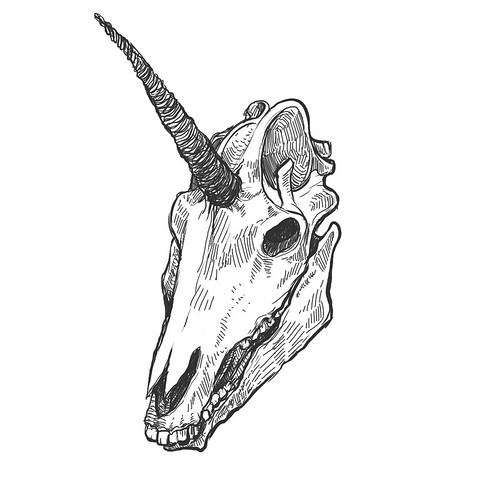
As a result, some of us may or may not have taken to answering this question with “a unicorn skull.” Another quick survey of the office suggests that other answers may include “a harmonium”, “a crystal skull”, “lots of stuff”,  “this [insert object] that someone else actually found but I am pretending that I found for the sake of this conversation” and the phrase “well, it depends…”

Moving on to more serious matters…

5)      There’s not that much archaeology in New Zealand though, is there?*

This is one of the more frequent questions asked here in New Zealand and it can be a little dispiriting to be reminded of how many people don’t realise what a rich, interesting and unique archaeological record we have in this country.

From the very first Polynesian settlers, arriving here c. 1300 AD (Jacomb et al. 2014), through to the most recent periods of immigration and settlement, New Zealand has a fascinating and globally significant archaeological record. It may be short, compared to other places in the world (such as our neighbour, Australia), but that lack of time depth is part of what makes it interesting. Archaeologists have used our relatively condensed archaeological record to look at the impact of human settlement on the environment, to better understand patterns of settlement, migration and  trade, motivations for warfare, the processes of social and cultural change, and how people adapt to new social and physical environments (among many, many other things).

Excavations at a 14th century archaeological site in the Catlins. Image: K. Webb.

Excavations at a 14th-16th century archaeological site in the Catlins. Image: K. Webb.

Archaeology in New Zealand is protected by the Heritage New Zealand Pouhere Taonga Act 2014, which “defines an archaeological site as a place associated with pre-1900 human activity, where there may be evidence relating to the history of New Zealand” (Heritage New Zealand Pouhere Taonga 2014). The modification or destruction of any such site, which includes standing structures, requires the permission of Heritage New Zealand, and usually involves one or more archaeologists recording and salvaging any archaeological features or material found during that process.

As those of you who follow our work here in Christchurch will have realised, this means that there is in fact a lot of archaeology in New Zealand. Even more than that, the wide scope of the work that is being carried out throughout the country has huge potential to add to our understanding of people in the past and their influence on the world around them.

6)      Who pays for all that?

Simplified, there are two main types of archaeological work undertaken in New Zealand: research archaeology, or those investigations carried out by the universities and/or independent researchers, and cultural resource management, carried out by consulting or contracted archaeologists in response to the modification or destruction of sites, as governed by the 2014 act. As a result, there are different methods of paying for that work.

Research archaeology is usually funded through the universities themselves or through research grants such as those provided by the Marsden Fund. Cultural resource management archaeology functions as a ‘polluter pays’ system, in which the authority holder covers the cost of recording and salvaging the archaeological information being lost through the modification or destruction of an archaeological site.

Cultural heritage management archaeology in Christchurch. Image: M. Carter.

Cultural heritage management archaeology in Christchurch. Image: M. Carter.

7)      Huh. Why? What’s the point?

To put it simply? Because our heritage is important. Because understanding where and who and what we’ve come from, as individuals, as a society, as a culture and as a country, is invaluable in understanding where we are now and where we may be in the future.  Because future generations deserve the opportunity to explore that heritage for themselves without wondering why we didn’t do more to save it for them. Because the actions and creations and lives of the people who’ve gone before us deserve to be remembered. Because there are things we learn from the archaeological record that would otherwise be lost to us. Because archaeology allows us to expand our horizons, to catch a glimpse of people and places that are so different to our own, yet linked to us through time and across cultures thanks to the things that they left behind.

Because, ultimately, people are important, and at its heart, archaeology is all about people.

 Jessie Garland

*¹ Less frequently, Indiana Jones may be switched out for Lara Croft.
Apparently, palaeontologists often get the same question in reverse and have responded with t-shirts.


References

Jacomb, C., Holdaway, R.N., Allentoft, M.E., Bunce, M., Oskam, C.L., Walter,
R., Brooks, E., 2014. High-precision dating and ancient DNA profiling of moa (Aves: Dinornithiformes) eggshell documents a complex feature at Wairau Bar and refines the chronology of New Zealand settlement by Polynesians. In Journal of Archaeological Science (2014), doi: 10.1016/j.jas.2014.05.023. [online] Available at www.sciencedirect.com

Peeling back the onion of time

Recording standing structures not only involves architectural drawings and photography, but can also be quite destructive. In an attempt to modernise an old house owners will often cover “old fashioned” features with new materials, plasterboard being the chief culprit. So, during building recording part of our job often involves removing these modern linings (by any means necessary) to reveal the fabrics beneath, going back in time to see what the building was like originally. And, as you can imagine, taking to a wall with a hammer and crowbar is also good for stress relief.

Through extensive use of the notorious hardboard previous owners of this house had gone to great lengths to cover nearly every inch of original decoration inside the house in order to cut down on the weekly chore of dusting.

Through extensive use of the notorious hardboard previous owners of this house had gone to great lengths to cover nearly every inch of original decoration in the house. Every moulded shirting board, architrave and door panel was covered.

Every moulded skirting board, architrave and door panel in the house was covered with hardboard. Photo: K. Webb.

  Hardboard was used on the exterior of the house too. To cover up weatherboards and this decorative cast iron frieze along the top of the veranda.

Hardboard was used on the exterior of the house too. To cover up weatherboards and this decorative cast iron frieze along the top of the veranda. Photo: K. Webb.

Extensive investigation of the kitchen uncovered this finely moulded paper mache dado. This is the only example found so far of this product in Christchurch.

Extensive investigation in the kitchen uncovered this finely moulded paper mache dado. This is the only example of this product found so far in Christchurch. Photo: K. Webb.

Plasterboard and other modern wall linings sometimes have their merits though. They often have the unintended function of doing a really good job of preserving what is beneath it, particularly wallpaper.

wallpaper-layers

Wallpaper is usually found in multiple layers with a backing of scrim. It is sometimes possible to separate the layers right back to the original wallpaper, as long as no one has painted over it of course. Photo: L. Tremlett.

newspaper-wall-lining

We may even get a pleasant surprise when we get to the bottom layer. If there was not much money available for decorating, or for extra draft protection, people would often line their walls with newspaper. Photo: L. Tremlett.

This hand written note was found adhered to the tongue and groove match lining of a cottage in Lyttelton.

This hand written note was found adhered to the tongue and groove match lining of a cottage in Lyttelton. It was well preserved beneath a layer of scrim and plasterboard. It gives details of the sailing of the S. S. Grafton from Hokitika in (we think) 1880. What it was doing stuck in the middle of the front room wall of a cottage is a mystery. Photo: J. Garland

Digging deeper into the fabric of a building one may come across some interesting and sometimes, perhaps, elusive objects inside the walls and under the floors.

This book published by the Scottish Temperance movement in 1877 was found behind the tongue and groove lining in a house in Ashburton.

This book entitled Three Years in a Man-Trap published by the Scottish Temperance League in 1877 was found behind the tongue and groove lining in a house in Ashburton. In this case the books were used as a filler, instead of strips of wood, to even up the gap between the match lining and wall. Photo: J. Garland, H. Williams.

Quite often shoes are found concealed beneath the floors of houses.

Shoes are often found concealed beneath the floors of houses in Christchurch. During the 19th century in Britain and some European countries it was a common custom to conceal shoes within the fabric of the building as magical charms to protect the occupants of the building agains evil influences such as witches and ghosts. We can’t say for sure if this was always the case in Christchurch. Photo: K. Webb

We quite often find other items under the floors of houses, such as animal bones, bottles and other domestic rubbish, as well as the odd mummified cat. These items were most likely not deposited under the house for superstitious reasons, we hope. The cats are later given a proper burial.

This cane riding crop was found beneath the floor of the house of John Cracroft Wilson.

This cane riding crop was found beneath the floor of the house of John Cracroft Wilson. Image: I. Hill.

Beyond the superficial appearance of a structure there is a lot we can learn by quite literally peeling back the layers of a building, or excavating it, if you will. Buildings like these can be more than just houses once lived in. There’s history written in the walls, from the changing tastes in interior decoration to things intentionally hidden, covered up or accidentally lost. Whatever the reasons for these hidden bits and pieces, be they mundane, superstitious or inexplicable, they show us that it’s always worth looking beyond the surface of a building to find the treasures within.

Kirsa Webb