So, hair’s the thing…

As one 19th century advertisement begins, “in every civilised country throughout the world the human hair is always found to be a subject of peculiar attention.” For centuries, millenia even, we have tugged and twisted our hair into unnatural and often physically improbable shapes, sought luxury and lustre through the addition of all manner of substances and continually attempted to find a tried and true way of stopping the damn stuff from falling out.

The resulting works of art, be they hirsute, sleek or more reminiscent of a desert than a forest, have then been viewed through the discerning and often judgemental eyes of society. Your hair can mark your status, your wealth, your nationality, your personality traits, your identity, whether you want it to or not. It’s no wonder, really, that the care and maintenance of hair elicits such effort from us, is it?

With this in mind, the following images showcase some of the evidence we’ve found – archaeologically and historically – for hair care in the 19th century. Some of it is weird and wonderful, some of it was probably a bit uncomfortable, and some of it we still use today.

Just to set the scene. Note the flattering description of red-heads and the character assassination of brunettes. Image:

Just to set the scene. Note the flattering description of red-heads and the character assassination of brunettes. Image: Mataura Ensign 21/12/1899: 3.

Rowland's Macassar oil, culprit of oily hair and even oilier upholstery everywhere. Macassar oil was a hair restorative and beautifier, first introduced during the late 19th century by a barber named Alexander Rowland. It's the reason for the term 'antimacassar', which refers to the piece of fabric thrown over the top or back of arm chairs to deal with the oily residue hair-conscious people were leaving on furniture all over the place. The advertisement mentions scurf, which is another word for dandruff (I did not know this prior to this post), as well as the restoration of "whiskers, mustachios and eyebrows". How versatile! Image: J. Garland.

Rowland’s Macassar oil, perpetrator of oily hair and even oilier upholstery everywhere. Macassar oil was a hair restorative and beautifier, first introduced during the late 18th century by a barber named Alexander Rowland. It’s the reason for the term ‘antimacassar’, which refers to the piece of fabric thrown over the top or back of arm chairs to deal with the oily residue hair-conscious people were leaving on furniture all over the place. The advertisement mentions scurf, which is another word for dandruff (I did not know this prior to this post), as well as the restoration of “whiskers, mustachios and eyebrows”. How versatile! Image: New Zealand Gazette and Wellington Spectator 18/02/1843: 1, J. Garland.

May I direct your attention to the highlighted section, in which the application of electricity to the scalp is recommended as a cure for baldness.

May I direct your attention to the highlighted section, in which the application of electricity to the scalp is recommended as a cure for baldness. In all seriousness, though, some of these (maybe not the Venetian visor thing) are still used for the hair today, particularly the use of egg as a shampoo. Image: Tuapeka Times 6/04/1889: 2.

Bear's grease

Genuine Russian Bears Grease, made from (presumably) genuine Russian bears. Bears grease derived its popular reputation for hair care from the fact that since bears were hairy, rubbing their fat on your own head would also promote the growth of hair. Don’t be too quick to laugh, I’m sure similarly ridiculous misunderstandings of cause and effect are still around today. It was initially made from actual bears, although some later versions used anything from goose grease to lard as the base of the product. To promote the authenticity of their product, some hairdressers used to keep live bears, bear skins, or something that they could pass off as bear skins in the shop windows to convince customers that their bear’s grease was totally the genuine thing. Image: J. Garland.

The Toilet

Home remedies. While some of these might sound like risky combinations of chemicals (camphor!), many of them do actually have hair care properties. Sub-carbonate of potass is potassium carbonate, used to make soaps. Camphor, used to make mothballs and other pest deterrents, as well as embalming fluid, is also an active ingredient in anti-itch gels and various medicinal products applied externally. Still, maybe don’t try these at home. Image: Daily Southern Cross 5/12/1856: 3.

Dr Frampton's Pomatum, by Price & Co., Her Majesty's Perfumers. For those with unruly hair, unhealthy hair or hair that just won't stay on the head at all. Pomatum was a common hair product during the 19th century and well into the 20th century (also known as pomade). It was usually made of a scented grease or lard and used to smooth down the hair (or moustache, presumably). Articles towards the end of the century, when the use of pomatum had become slightly less widespread, speak disparagingly of resulting "locks saturated with strongly-scented grease" (Nelson Evening Mail 19/10/1882: 4). Image: J. Garland.

Dr Frampton’s Pomatum, by Price & Co., Her Majesty’s perfumers. For those with unruly hair, unhealthy hair or hair that just won’t stay on the head at all. Pomatum was a common hair product during the 19th century and well into the 20th century (also known as pomade). It was usually made of a scented grease or lard and used to smooth down the hair (or moustache, presumably). Articles towards the end of the century, when the use of pomatum had become slightly less widespread, speak disparagingly of resulting “locks saturated with strongly-scented grease” (Grey River Argus 31/10/1882: 4). Image: J. Garland.

Erm.

Erm. Maybe also don’t try this at home. Image: Southland Times 12/02/1885: 4.

Bay rum

A Bay Rum bottle, complete with label denoting it a “refreshing and invigorating tonic for the hair.” Bay Rum became increasingly popular towards the end of the 19th century, although it was in use from much earlier. Although primarily marketed as a hair product, it was also used for a variety of other personal grooming issues, from skin beautification to the relief of tired feet. Image: J. Garland.

potato dye

Some uses for claret and potatoes that you may not have heard of before…Image: Press 31/07/1896: 2.

DSC_0285ed1

A hair comb, made from vulcanite or vulcanised rubber. Regular brushing and combing of the hair was one of the most frequent recommendations in 19th century newspapers and magazines for the encouragement of healthy hair. Not so unusual to us, this one. Image: G. Jackson.

One thing that was notably different to general hair care now was the recommended frequency of washing.

One thing that was notably different to general hair care now was the recommended frequency of washing. Most articles suggested that it be washed, at the most, once a week and recommended intervals of several weeks to a month as optimal. Shampoo was also not as integral to hair washing as it is now, with a lot of articles recommending various oil and water concoctions or simply the use of warm water. The considerations given to the health concerns of wet hair also speak to the differences between our lives now and the lives – and environment – of those in the 19th century, who did not have the luxury of heat pumps and hair dryers. Image: Auckland Star 17/03/1899: 7.

Alexander Barry's Tricopherous is probably the most common hair related artefact that we find on 19th century archaeological sites. Composes largely of alcohol and oil, it promised all manner of miracles when it came to the beauty and restoration of the hair, including the cure of baldness. It was, however, also used in place of pomatum as a far less greasy tool with which to style the hair. Image: G. Jackson.

Alexander Barry’s Tricopherous is probably the most common hair related artefact that we find on 19th century archaeological sites. Composed largely of alcohol and oil, it promised all manner of miracles when it came to the beauty and restoration of the hair, including the cure of baldness. It was, however, also used in place of pomatum as a far less greasy tool with which to style the hair. Image: G. Jackson.

less coffee more hair

To finish off, while I’m sure that “obeying the laws of health” can’t help but aid the vitality of your hair, as someone with very long hair who consumes their fair share of wine, tea and coffee, I have to say that the second paragraph is very definitely not true. Image: Star 6/02/1897: 3.

Jessie Garland 
In which monkeys have mirrors, battles are fought and hair is oiled.

In writing an introduction to this post, I found myself straying unexpectedly into alliteration. This happens sometimes. I decided to run with it.

So, as an aside from our accustomed analysis of antiquity, we’ve assembled an array of artefacts for the the amusement and appreciation of archaeologist and amateur alike. Enjoy!

asvtaVDsetra

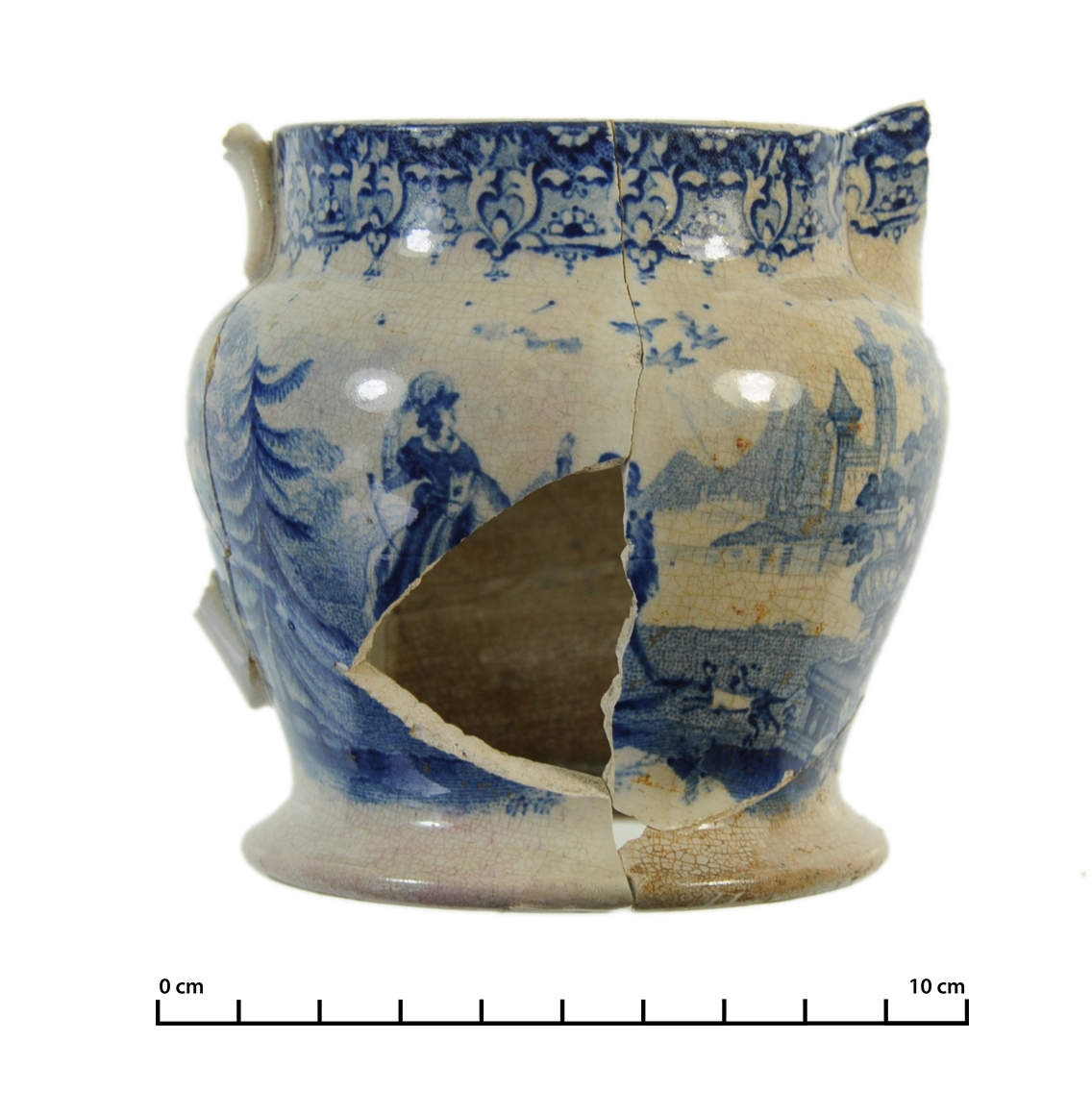
A lovely little milk jug recovered from one of our larger sites on Lichfield Street. We don’t often find jugs like these in such complete condition: we’re far more likely to find just the spout or part of the handle. Image: J. Garland.

sejsrnaeags

A Christchurch trade token, issued by Hobday and Jobberns, a drapery firm based at Waterloo House on Cashel Street. Tokens like these were used in place of government issued money for much of the late 19th century due to the shortage of actual currency in New Zealand during this period (Thomas & Dale 1950: 42-46). Image: J. Garland.

dsnsrynsv

A blue and white transfer printed saucer featuring three figures meeting under an arch. Unfortunately, no maker’s mark was evident on this piece, meaning we were unable to trace it to its original manufacturer. Image: J. Garland.

qiuu4htqo9huga

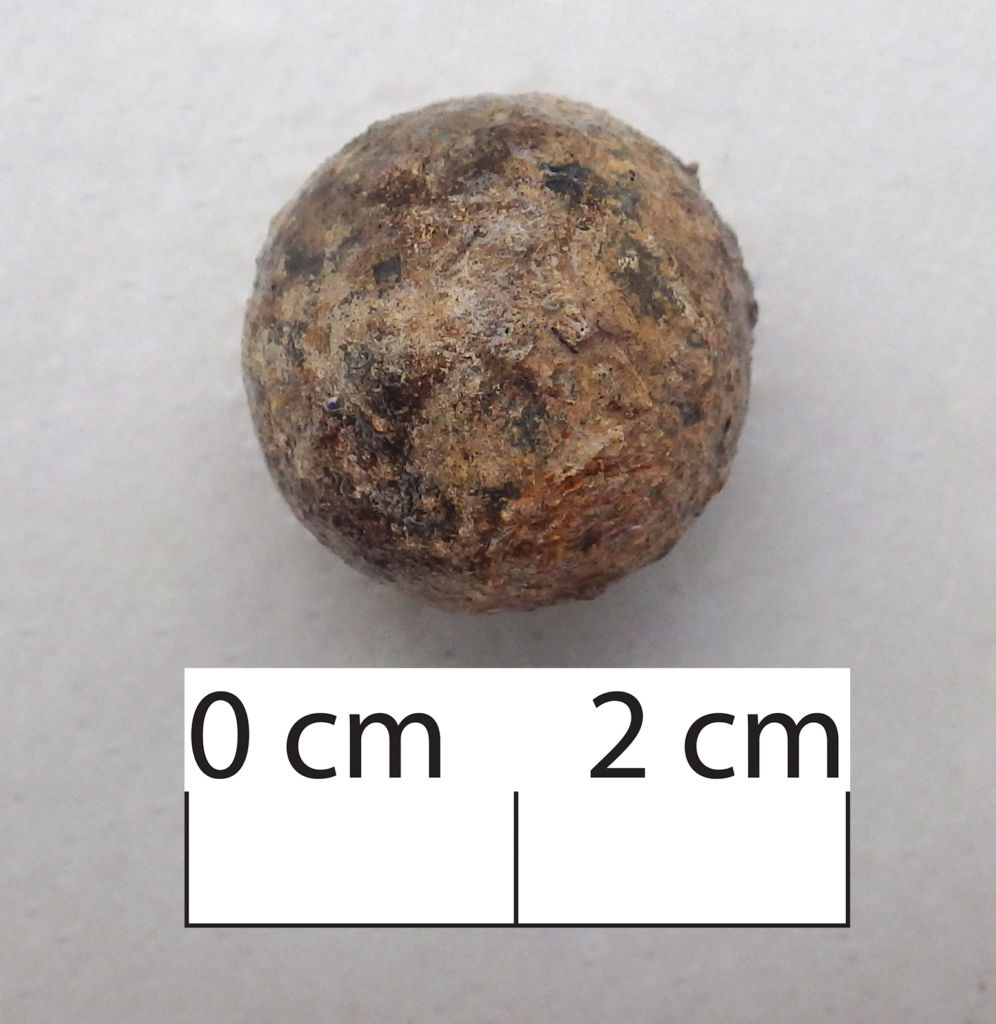
A musket ball! This was a pretty unexpected find: musket balls are not common finds, particularly in the context of 19th century Christchurch. It probably wasn’t used for an actual musket, but may have been intended for a smaller calibre gun. Image: J. Garland.

ma;leignao;rjnv

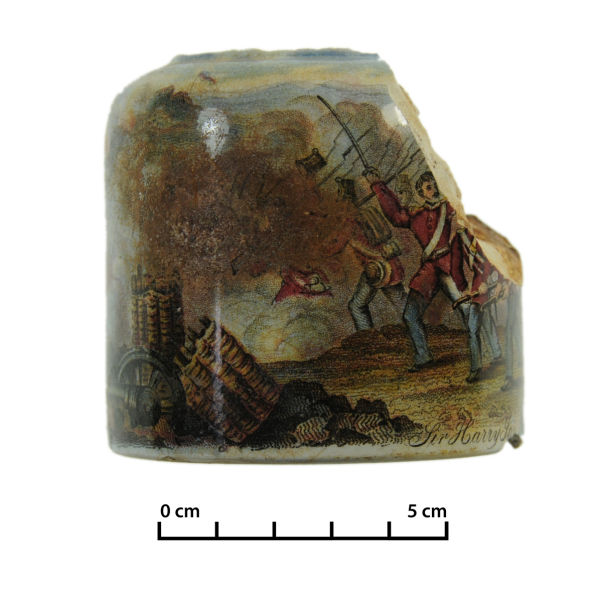
This ‘Pratt ware’ jar  is decorated with a scene from the Crimean war, featuring Sir Harry Jones, a well known British military figure. Sir Harry, who rose to the status of general, commanded the British forces and then the Royal Engineers during the Crimean war, having previously fought in several other campaigns, including one with the Duke of Wellington. Image: J. Garland.

k;bvkutgck

A beautiful gilt decorated and transfer printed candle holder, or ‘chamber stick’, as they were known during the 19th century. The cone feature to the top left of the vessel was there to hold the candle-snuffer, keeping it within easy reach. Image: G. Jackson.

.mbukctjfc

This wee bottle originally contained Rowland’s Macassar Oil, a hair restorative and beautifier. It was first introduced during the late 18th century by Alexander Rowland, a barber (a very expensive barber, apparently) based in St James, London. It was then marketed by his son, Alexander Rowland Junior, who did so to great success (Rowland 2013). Macassar oil was in use throughout the 19th century and well into the 20th century and is the origin of the term ‘antimacassar’, referring to the piece of fabric thrown over the top or back of arm chairs. Apparently, antimacassars were developed in response to the oily residue people wearing the oil would leave on furniture. Who knew! Image: J. Garland.

oiuygvoutcn

A teacup fragment, on which the image of a monkey examining itself in the mirror is displayed. Because, why not? Image: K. Bone.

sgbswtrns

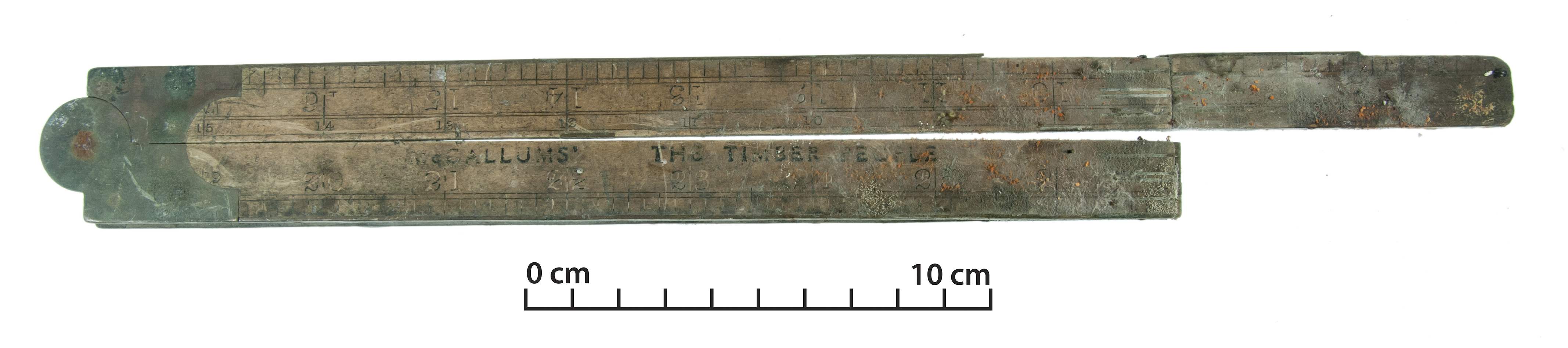
A wooden ruler found under the floorboards of a 19th century house in Christchurch, with “McCallums The Timber People” printed on the front. McCallum & Co were an Invercargill based timber company, who were established prior to 1864. By the early 20th century, the company was run by a partnership between William Asher and Archibald McCallum, with branch offices in Dunedin, Gore, Oamaru, Kelso and Winton (Cyclopedia of New Zealand 1905). They appear to have been purchased by Fletcher’s at some point during the 20th century. Image: J. Garland.

IMGP3307-fixed-background-removed-for-web

A beautiful Alma patterned plate, found on a site on Armagh Street. There isn’t really much to say about this particular plate. I just think it’s pretty. Image: J. Garland.

kjncliqurgbf

It can be pretty easy to forget that there was another British monarch between the end of George IV’s reign and the beginning of Queen Victoria’s time on the throne. There’s the Georgian period, then there’s the Victorian period and those seven years between them when William IV was the King of England get sort of forgotten about. This coin, a half-crown, was minted in 1835, during William’s reign, and it is his slightly smiling profile that adorns one side, jaunty hair and all. Image: J. Garland.

skehfvbakEBFz

The royal bust on this artefact isn’t quite as affable seeming as William IV’s. In fact, if I may say so, the smudges of dirt don’t do anything for the shape of her nose (a bit beak like, isn’t it?). This pipe celebrates Queen Victoria’s Royal Jubilee, which she had two of – one in 1887 (50 years) and one in 1897 (60 years). It’s unclear exactly which one this pipe is referring to. Image: J. Garland.

rbrwhsrnzar

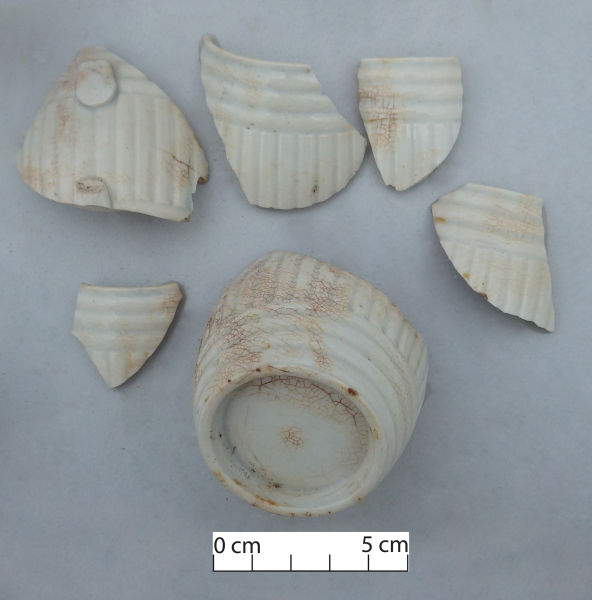
And lastly, here is a teacup shaped like a barrel. Image: J. Garland.

Jessie Garland

References

Cyclopedia Company Limited, 1905. Cyclopedia of New Zealand [Otago and Southland Provincial Districts]. Cyclopedia Company Ltd., Christchurch. [online] Available at www.nzetc.victoria.ac.nz. [Accessed May 2015]

Rowland, R., 2013. Fifteen Generations of the Rowland Family. [online] Available at www.rowlandgenerations.org. [Accessed May 2015]

Thomas, E. R. & Dale, L. J., 1950. They Made Their Own Money: the Story of Early Canterbury Traders & Their Tokens. Royal Numismatic Society of New Zealand, Canterbury.

Just what the doctor ordered!

When it comes to the weird and wonderful in 19th century life, it’s hard to go past the field of medicine: specifically, pharmaceutical and ‘self-care’ remedies. Health-related products can be some of the wackiest and most interesting things we find in the archaeological record, especially when they’re put into the context of contemporary advertising and marketing strategies. They also offer us the opportunity to understand the health concerns of people in the past: not just what they actually suffered from and how they treated it, but what they thought they suffered from and what they considered to be healthy.

Mostly, though, they’re fascinating. And often hilarious.

With that in mind, the following are some of our favourites. Enjoy!

akebgaw

Lamplough’s Effervescing Pyretic Saline. A ‘cure-all’ patent medicine, Lamplough’s Saline was made by Henry Lamplough, based in Holborn, London, in the latter half of the 19th century. It was advertised as a remedy for SO many ailments, from cholera and smallpox to ‘eruptive skin’, sea sickness and headaches. Several of the advertisements emphasise its efficacy in preventing tropical and colonial diseases, which suggests that it was aimed more at the export market than the local one. Image (clockwise, from top left): G. Jackson, Wikimedia, Otago Witness 19/10//1888: 40, Wanganui Herald 19/09/1887:2.

asjhbfawe

St Jacobs Oil, the “Great German Remedy”, was advertised primarily as a pain reliever. One article describes it as a “standard pain remedy for bruises, sprains or sores in man or beast” (Otago Witness 26/04/1893: 3) and the “conquers pain” tagline was common in advertisements for the oil. According to the British Medical Journal in 1894, St Jacobs Oil was 84% turpentine with traces of camphor 10% ether, 5% alcohol, 2% carbolic acid, 0.4% capsicum and 0.01% aconite. While aconite (and capsicum, to a degree) is known to have pain-relieving properties, particularly for rheumatism and as an anti-inflammatory, turpentine and carbolic acid are more commonly used as antiseptics or disinfectants. Carbolic acid, in particular, is now considered to be fairly toxic. Image: J. Garland, Otago Witness 28/04/1883: 3.

awegarg

Eucalyptus oil was a popular remedy during the 19th century as, to a degree, it still is now. Although this particular bottle is embossed with the name of R. G. Bosisto, no information could be found about this person. It’s possible that the bottle was associated with Joseph Bosisto, a well-known eucalyptus oil manufacturer who began harvesting and selling the oil in 1853, either as a derivative of his product or an imitation. Advertisements for the oil provide an interesting example of how medical advertising can reflect the health concerns of the past as much as the properties of the actual medicine.. In the 1880s, many of the advertisements emphasise the usefulness of eucalyptus oil as a remedy for cholera, while in the early 20th century, at the height of the influenza epidemic, the advertisements were all about its use in alleviating colds and influenza. Image: J. Garland, Southland Times 8/08/1883:2Dominion 18/09/1919:2.

jhvktgcv

Bishop’s Granular Citrate of Lithia and Citrate of Magnesia, the creations of Alfred Bishop, a London chemist established in 1857. The magnesia was advertised for stomach ailments, as a product “surpassing the ordinary seidletz powder”, while the lithia seems to have primarily been advertised as a remedy for gout. One recipe for the citrate of magnesia suggests that it contained a mixture of sodium bicarbonate and tartaric acid (which is awfully close to baking powder, when you think about it…). Image: J. Garland, Otago Daily Times 12/01/1900: 8, Otago Witness 01/02/1868: 10.

esnsrtn

Holloway’s Ointment and Pills, advertised as ‘cure anything’ products, listed everything from asthma and cancer to ‘female complaints’ within the scope of their curative abilities. They were the brainchild of Thomas Holloway, who began selling his ointment and pills in the 1830s in England. He was something of an advertising pioneer, an approach that paid off for him: by the mid-19th century Holloway’s products had become hugely popular and he had amassed a significant fortune. Although it seems to be unclear exactly what was in the ointment, the pills were later discovered to contain non-medicinal, but harmless ingredients like ginger, soap and castor oil. Image: J. Garland, Poverty Bay Herald 21/04/1884: 4Tuapeka Times 22/12/1870: 10Clutha Leader 25/06/1880: 7.

.kdfnvakje

Charles Hockin, chemist, was based in London in the early to mid-19th century. He retired in 1859, although the company continued under the name of Hockin, Wilson/Welson & Co. The firm produced a variety of products, including digestive drops, ginger beer powder, essence of Rennett, “inexhaustible salts” and liver pills. Chief among them though, was a product called Seidlitz Powder, a “gentle medicine” that was somehow also a “purgative salt”, marketed as long lasting and a remedy for day to day ailments (including the ever present bilious attacks!). Image: J. Garland, Thames Adviser 13/04/1878: 4Lyttelton Times 14/01/1857: 12.

dtnsrtgn

This bottle, embossed with “PRESTON SALTS” appears to have contained Mounsey’s Preston Smelling Salts, the type of salts used to revive fainting ladies (or men, one supposes). Recipes published in 1854 and 1892 indicate that the salts were largely ammonia based, containing a solution of ammonia, powdered chloride of ammonia and powdered carbonate of ammonia in addition to powdered carbonate of potassium, oil of bergamot, oil of clove and sometimes oil of lavender. Several types of smelling salts existed during the 19th century, but Preston Salts seems to have been among the higher quality ones available. It was advertised in New Zealand from the 1850s onwards. Image: J. Garland, Lyttelton Times 12/02/1853: 3.

wrtger

Ford’s Pectoral Balsam of Horehound was first patented by Robert Ford in 1816. The original mixture contained horehound (a plant with medicinal qualities), liquorice root, water, spirit of wine, gum camphore, Turkish opium, “benjamin” (actually benzoin), squill (another medicinal plant), oil of aniseed and clarified honey. The recipe was later modified by his successor, Thomas Ford, in 1830, although the modifications seem to have been minimal. It was advertised as a remedy for respiratory ailments, including influenza, asthma and coughs. Image: C. Dickson, Wellington Independent 17/10/1865: 8.

agvaerga

The “unequalled and invincible” Woods Great Peppermint Cure claimed to cure coughs and colds and was the creation of chemist W. E. Woods, a New Zealand chemist. Woods first set up shop in Hastings, Hawkes Bay, in 1881 before moving to Wellington and eventually to Sydney, where he died in 1927. W. E. Woods & Co., New Zealand, however, remained active his death. Image: C. Dickson, Hawkes Bay Herald 13/06/1895: 2, 13/06/1895: 4.

erhgq45h

The one and only Califig, “nature’s own laxative”. Advertised primarily for bowel complaints, the California Syrup of Figs also claimed to alleviate the problems of heartburn, bad breath and loss of appetite. It was particularly targeted at mothers, as a remedy for unhappy children, with one advertisement bearing the tagline “once ‘touchy’ and tearful, now full of fun, his system cleansed with Califig.” Image: J. Garland, Bottlepickers,  New Zealand Herald 8/02/1942: 3.

Jessie Garland

Coffee: nemesis of tea, friend to chicory, moral downfall of sheep and lifeblood of archaeologists

It must be said that, here at Underground Overground Archaeology, we have something of a coffee problem. With a (very) few exceptions we’re an office of hardened coffee drinkers, ranging from one-cup-a-day habits to the occasional and somewhat obscene four-or-five-cups-a-day problem. We frequent our local coffee shop (the fantastic Vivace on Tuam Street) so much that the staff sort of just laugh kindly at us when we come in and order more coffee (and muffins!) than one office should reasonably be expected to consume. On the rare and terrible mornings when someone discovers that the coffee is, in fact, all gone, the discovery is met with a chorus of despair and rapid scramble to “get coffee, get coffee, get coffee”, lest we release the ravening caffeine deprived beast lurking within us all.

Everyday is a job for coffee.

Everyday is a job for coffee in this office. Image: Imgarcade

It’s a problem. Not an uncommon one in modern society, though, is it? A caffeine addiction seems almost par for the course in today’s bustling workplaces and busy lives. Coffee drinking is everywhere and with it comes the rise of coffee cultures, from the social and economic ubiquity of Starbucks to the hordes of hipsters congregating in fair trade organic coffee houses.

It’s not, however, an exclusively modern phenomenon, as many might assume. We tend, I think, to imagine tea as the hot beverage of choice in Victorian society and it was, just not exclusively so. Coffee, and the ritual of coffee drinking, was also a well-established part of 19th century life. Coffee houses (or ‘palaces’) were not uncommon establishments in major cities: in Christchurch over the years the city saw the Victoria Coffee House and Reading Room in Lyttelton, the Avon Bank Coffee House, the Old Post Office Coffee House and Uncle Tom’s Coffee House on High Street, among others. There were even coffee carts! Interestingly, as an aside, most of these houses appear to have offered food and sometimes lodging as well, with a notable number also involved in the temperance movement of the late 19th century (Lyttelton Times 19/12/1860: 6, 14/12/1861: 1, 21/12/1861: 1).

Coffee jacket and advertisement for the Victoria Coffee House in Lyttelton. Image

Coffee jacket and advertisement for the Victoria Coffee House in Lyttelton. Image: New Zealand Herald 13/06/1903: 6 and Lyttelton Times 8/07/1857: 8.

Along with the coffee houses, numerous articles can be found in contemporary newspapers on the subject of coffee drinking in 19th century society. Some discuss the proper preparations for a cup of coffee, the best culinary accompaniments and how to distinguish the good coffee from the bad. Others mention the names of famous people who swore by the drink, from Voltaire to Frederick the Great, in addition to numerous accounts of the benefits and the dangers of coffee consumption. In fact, in some sources, discussions and accounts of coffee and those who drank it are all but indistinguishable from similar discussions in the modern media (including an article on guarana as a rival to coffee, for all you V & Red Bull drinkers out there).

A selection of historical articles on coffee. Images:

A selection of historical articles on coffee. Images: Auckland Star 28/06/1916: 8Bruce Herald 8/11/1889: 5, 1/08/1899: 2Star 1/04/1905: 3, Taranaki Herald 29/05/1891: 4

Coffee, the moral downfall of Abyssinian sheep. Image:

Coffee, the moral downfall of Abyssinian sheep. Image: Evening Post 23/06/1923: 23.

On the other hand, the article suggesting that the ingestion of coffee plants led to the moral downfall of previously sober and well-conducted Abyssian sheep is perhaps more obviously a product of its time (I could not make that up, I swear). The same goes for the article discussing coffee as a substitute afternoon drink for the “once common absinthe”, or the one comparing the “muddy and yellowish” skin of coffee drinkers to the “withered, dried up and old look” given to tea drinkers. Another description of coffee drinkers employed the terminology of ‘coffee drunkeness’ and ended with a statement many modern coffee dependents may identify with:  “the victims suffered so seriously they dared not abandon the drinking of coffee for fear of death” (Mataura Ensign 8/10/1896: 4).

Article on 'coffee drunkenness' from 1896. Image:

Article on ‘coffee drunkenness’ from 1896. Image: Mataura Ensign 8/10/1896: 4.

In all seriousness, though, it’s clear from historical sources that coffee drinking was a common habit in 19th century Christchurch, and one not so far removed from modern culture as we might think. It’s interesting, then, to see how it is represented in the archaeological record (and to think about how it might be represented today). As with so many other consumables, coffee is only visible indirectly through the various objects used to store, prepare and drink it in the past, and the places (specifically, coffee houses) at which it was consumed. We haven’t yet excavated the site of any coffee houses in the city, so in Christchurch, our evidence seems to come down to two types of objects: coffee cups, or ‘cans’ as they are known, and coffee and chicory bottles.

Coffee cans are mug-like ceramic drinking vessels, with straight sides and lower, flatter bases than teacups, made from porcelain or earthenware. They’re predominantly associated with coffee drinking from the late 18th century onwards (Brooks 2005): advertisements from the Victorian era make special reference to coffee cups as an item distinct from tea cups and saucers (Lyttelton Times 14/11/1857: 7, Observer 22/08/1885: 4). Here in Christchurch, we find them in a variety of sizes, although they have a tendency to be larger than tea wares. They’re often decorated with transfer prints, sponged decoration or gilt banding, although they’re less likely to be found as part of an identically patterned set than teacups (this may be in part because coffee cans don’t seem to have had accompanying saucers).

A ceramic coffee can found in Christchurch. Image: J. Garland.

A ceramic coffee can found in Christchurch. Image: J. Garland.

When viewed from a broad perspective, coffee cans indicate a very clear delineation between the rituals of tea drinking and the ritual of coffee drinking. They suggest (through the quantities found on sites) that, however popular it was, coffee drinking remained less common than tea drinking in the 19th century. They may, eventually, be able to provide us with some indication of the types of people drinking coffee: whether they were predominantly male or female, if age or national origin was a factor or if class and social status played a part. As individual objects, however, coffee cans don’t actually tell us a whole lot, other than indicating the probable presence of a coffee drinker in a household. They certainly don’t tell us much about the ways in coffee was prepared or drunk (i.e. at breakfast, in social gatherings), or the types of coffee consumed by people in 19th century Christchurch.

In fact, there’s little in the way of archaeological information on the types of coffee available to the 19th century consumer, although there’s a surfeit of brands and types listed and advertised in the historical record. Historical examples include beans and grounds, sold by brands like Crease’s A1 Coffee, Webster’s Coffee, Dragon Coffee or Brown, Barrett & Co’s Excelsior Coffee. By contrast, the only archaeological evidence for the coffee itself comes from the coffee and chicory bottles occasionally found in Christchurch (and elsewhere).

Symington's coffee & chicory bottle found in Christchurch. Image: J. Garland.

Symington’ & Co’s coffee & chicory bottle found in Christchurch. Image: J. Garland.

Coffee and chicory was an essence, sold as thick syrup and used as a form of instant coffee during the 19th and early 20th centuries (Christchurch City Libraries 2014). The chicory, a plant root, was used to augment the bitter ‘coffee’ taste of the syrup, and the concoction appears to have been relatively popular in its time. Chicory was not always easy to come by in New Zealand: most of it was actually grown here in Canterbury and supplied to the rest of the country (Thames Star 25/01/1893: 4). Interestingly, most of the coffee and chicory bottles we find on Christchurch sites were produced by Symington & Co, an Edinburgh based company, rather than local chicory farmers such as Mr. W. Roberts, who owned the Canterbury Chicory Works in Lincoln, or Edwin Trent, based in Templeton (of Trent Brothers fame). As it turns out, people in other parts of the country turned to other ingredients when they couldn’t get their hands on chicory, local or international: unfortunately, in one case, the substitute used turned out to be turnip (Thames Star 25/01/1893: 4). Coffee and turnip? Mmm, no thanks.

Workers on Mr W. Roberts' chicory farm, Spreydon, 1905. Image: Christchurch City Libraries

Workers on Mr W. Roberts’ chicory farm, Spreydon, 1905. Image: Christchurch City Libraries, File Reference: PhotoCD 10, IMG0037 

All things considered, it seems that despite the use of such unconventional flavour supplements (and the apparent Victorian concern with the moral welfare of sheep), it’s not difficult to find parallels between the culture of coffee drinking in 19th century Christchurch and that of the present day. In fact, there’s far more of them than I was expecting when I first started looking into this. Coffee houses are a common and integral part of our everyday lives here and now and we regularly see headlines and articles debating the health benefits of coffee, the best techniques for its preparation and the characteristics of a good flat white or cappuccino. We still have specific cups from which to sip our delicious caffeinated beverages and, while chicory is no longer a common addition, some of us still take great delight in adding various flavoured syrups to our coffee. And, no doubt, much of the information available on the subject in the modern media will be as entertaining to future archaeologists and historians as the Victorian newspapers have been for me.

Jessie Garland

References

Ashburton Guardian. [online] Available at www.paperspast.natlib.govt.nz

Auckland Star. [online] Available at www.paperspast.natlib.govt.nz

Brooks, A., 2005. An Archaeological Guide to British Ceramics in Australia: 1788-1901.  The Australasian Society for Historical Archaeology, Sydney.

Bruce Herald. [online] Available at www.paperspast.natlib.govt.nz

Christchurch City Libraries, 2014. Chicory: an early Christchurch industry. [online] Available at www.christchurchcitylibraries.com

Evening Post. [online] Available at www.paperspast.natlib.govt.nz

Lyttelton Times. [online] Available at www.paperspast.natlib.govt.nz

Mataura Ensign. [online] Available at www.paperspast.natlib.govt.nz

New Zealand Herald. [online] Available at www.paperspast.natlib.govt.nz

Observer. [online] Available at www.paperspast.natlib.govt.nz

Star. [online] Available at www.paperspast.natlib.govt.nz

Stay classy, Christchurch

Class is a complicated concept, historically and in the present day. It’s difficult to define, somewhat ephemeral, and yet so clearly there in our societies and our cultures. For better or for worse, social stratification has been part of human life for a really long time now and it shows, in our material culture, in our buildings and in our landscapes.

As a consequence, class, much like gender, is visible in the archaeological record, although not without a whole lot of complications (as is always the way, really). If there’s anything I’ve learned while I’ve been researching this (other than how idiotically ambitious it was to try and write about class in a short blog post), it’s that class is one of those concepts that depends.

To start with, it depends on how we’re interpreting it, and on what kind of ideas and experiences we’re using to make sense of it. It’s very easy, when interpreting and talking about concepts like class, to project our own present day ideas back onto past societies, because they’re the frame of reference we’re working from. I know that our discussions about class here in the office over the past week have constantly touched on class as we understand it now, especially as we tried to untangle our thoughts about what it is and how it’s represented in our material culture.

It also depends on how we’re defining it: are we talking about a part of society which shares similar socio-economic characteristics – i.e. income, social values, social behaviour, consumer choices – or are we talking about a part of society explicitly defined by the way it contrasts with other parts of society. After all, the ‘lower classes’ are only so-called because of how they differ from the ‘middle classes’ and the ‘upper classes’, aren’t they?

A 'definition' of middle class from 1896. Image: Star

A ‘definition’ of middle class from 1896. Image: Star 18/07/1896: 3

Typically, from a characteristics perspective in Western society (and I’m being really general here), upper class denotes inherited family prestige and/or great wealth; middle class tends to refer to a combination of ‘white collar’ professions, comfortable incomes, a certain level of education and/or social manners; and lower or working class to blue collar jobs, lower end incomes, lower levels of education, etc. We’re certainly used to hearing these kinds of class definitions for Victorian society, if not for our own.  Even as I’m writing this, though, I find myself disagreeing, thinking of exceptions, of variations within these definitions. How accurate, how universal are these distinctions? I end up with more questions than answers (and more than a little brain melting).

It depends on how we’re looking at it. From an archaeological perspective, we interpret individual and group behaviour and activities through the physical remnants of people’s lives. This includes intangible concepts like class, which are represented in the things people buy and use and the differences in those things between separate social groups. These differences could be stylistic, they could be cost or value based, they could be functional. If we’re using ceramics, we could look at the differences in decorative techniques and patterns between households, the differences in the types and forms of teawares and tablewares that people owned, or the relative cost of those different objects.

 Ceramics from Violet Cottage. Clockwise from top left: a tureen, a Fibre-decorated side plate, the base of a serving dish and a colander. Image: C. Dickson.


Ceramics from Violet Cottage. Clockwise from top left: a tureen, a Fibre-decorated side plate, the base of a serving dish and a colander. Ceramics like these can offer insights on the social status of their owners, through the variety of forms present, the decorative techniques and patterns used and the relative value of the vessels. Image: C. Dickson.

For example, archaeological studies elsewhere in the world have associated plain or minimally decorated tea and dinner sets with middle class Victorian households, for whom they’re not just aesthetically pleasing, but associated with ideals of gentility, domesticity and a kind of conformity with the fashions and ideals of their neighbours (Fitts 1991). Other studies have looked at the different types of ceramic vessels people owned: the more variety of types – i.e. the more elaborate and specialised the dinner set – the better off the household might be (Brooks 2002). Even more studies have looked at the relative cost of certain types of ceramic, to see if they might correspond to differences in the social status of households (Miller 1991). There’s always a danger here, though, of making broad, uncritical assumptions about social status or beliefs from artefacts (i.e. we have plain ceramics, therefore we have a middle class household). It definitely helps to have a good historical record for the site or assemblage:  the more historical context we have, the more we can use material culture to explore how people navigated and dealt with social classes, rather than just using it to identify a certain class.

A bone china jug from Christchurch, with sprigged decoration. Bone china, particularly plain or minimally decorated examples, have been considered characteristic of the middle classes elsewhere in the world (Fitts). Unfortunately, we don't yet know how this applies to a Christchurch context. Image: C. Dickson.

A bone china jug from Christchurch, with sprigged decoration. Bone china, particularly plain or minimally decorated examples, have been considered characteristic of the middle classes elsewhere in the world (Fitts 1991), and a reflection of certain middle class values, like domesticity, virtue and modesty. Unfortunately, we don’t yet know how this applies to a Christchurch context. Image: C. Dickson.

Context is hugely important when it comes to questions like this. More than anything else, I think, our understanding of social class depends on where and when we’re looking at it. Class is quite a fluid concept and reflects the various social, economic and cultural processes of different times and places. The characteristics of the different social classes in Christchurch, for example, are not the same as the characteristics of those classes in London, or even America, although they may be influenced by them. They’re not even the same as other cities in New Zealand. We’re operating in a very different social and historical context here: different background, different population demographic, different physical, social and economic environment. It’s been said that Christchurch’s upper class, or ‘elite’, was smaller and far more fluid than its British counterpart: here, the upper classes included professionals (lawyers, business owners, etc) who would elsewhere have been considered middle class (McAloon 2000: 193-221). It’s also likely that the so-called middle class of the city was larger than elsewhere and, again, more varied. Although, really, it’s hard to say.

You have to ask then, how did the idiosyncrasies (economic, political, cultural) of Christchurch society affect the definitions of classes in the city? Did it make the differences between what would elsewhere be considered the lower class and the middle classes less pronounced? Was there more mobility between the social classes here than elsewhere? Did people back then actively consider themselves to be middle or upper or lower class or are we just giving them our own labels? Were distinctions in the material culture of different social classes more or less obvious than in, say, England? And most of all, can we see this in the archaeological record?

The answer to the last one is yes, probably, but it’s going to take a while. At this stage, we haven’t excavated enough sites with known class contexts to make any meaningful interpretations of social status in 19th century Christchurch. Before we can start to explore how people in different social groups were using material culture we need to look a bit more at what those different social groups were and how we might be able to associate them with certain types of artefacts. And that requires lots of archaeological sites with good historical records, and the time to compare them all. It’s difficult, but not impossible, and certainly something we’re working on.

As of now, we really only have a few very, very preliminary observations on social status in Christchurch. We’ve noticed that a lot of the residential sites we’re digging up here have very similar artefact assemblages: this might reflect a less pronounced class distinction in the city, the prevalence of one particular social class (the middle) here, or that the material culture of Victorian Christchurch is just too uniform to be a good indicator of class. Alternatively, it might just reflect the sample of sites we’ve excavated so far. We certainly haven’t noticed the kinds of patterns here that have been commented on elsewhere: there’s not been much of a prevalence of plain ceramics here, or contrasts between assemblages with a wide variety of forms and those with just a few types. We have noticed some interesting correlations between the styles of buildings and the social positions or professions of their occupants, especially when it comes to the contrast between the public and private spaces within houses (next week’s post!). It’ll be intriguing to see how these observations change as time goes on and we gather more data. No matter what, it should be interesting!

Jessie Garland

References

Brandon, J. C., 2009. A North American perspective on race and class in historical archaeology. In Majewsk, T. and Gaimster, D., eds. International Handbook of Historical Archaeology, pp. 3-16. Springer, New York.

Brooks, A., 2002. The cloud of unknowing: towards an international comparative analysis of eighteenth and nineteenth century ceramics. Australasian Historical Archaeology 20: 48-57.

Fitts, R., 1991. The archaeology of middle-class domesticity and gentility in Victorian Brooklyn. Historical Archaeology 33(1): 39-62

McAloon, J., 2000. The Christchurch elite. In Cookson, J. and Dunstall, G., eds). Southern Capital Christchurch: Towards a City Biography, 1850-2000., pp. 193-221. Canterbury University Press, Christchurch.

Miller, G.,1991. A revised set of CC index values for classification and economic scaling of English ceramics from 1787 to 1880. Historical Archaeology 25(l): l-25.